Magnesite Deck Repair in Westlake Village
Westlake Village is younger than most cities we work in — built out in the 1970s and 1980s — but its oldest condo and townhome communities still carry magnesite on their walkways, balconies, and stairs. Magnesite was the standard surface poured on apartment and condo buildings all over Southern California, and the first lake communities used it too. Most apartment and condo walkways of that era were built with it, and the ones in 91361 and 91362 are now forty to fifty years old.
Magnesite is a good surface until it isn’t. It cracks with age, and the Conejo Valley’s summers dry it out and open the cracks wider every year. Once water gets into a crack it travels under the surface and into the wood below. American Decking & Waterproofing Co repairs magnesite with the fiberglass system — magnesite and fiberglass together are how a worn-out magnesite surface becomes a waterproof deck again, covered by a 15-year warranty.
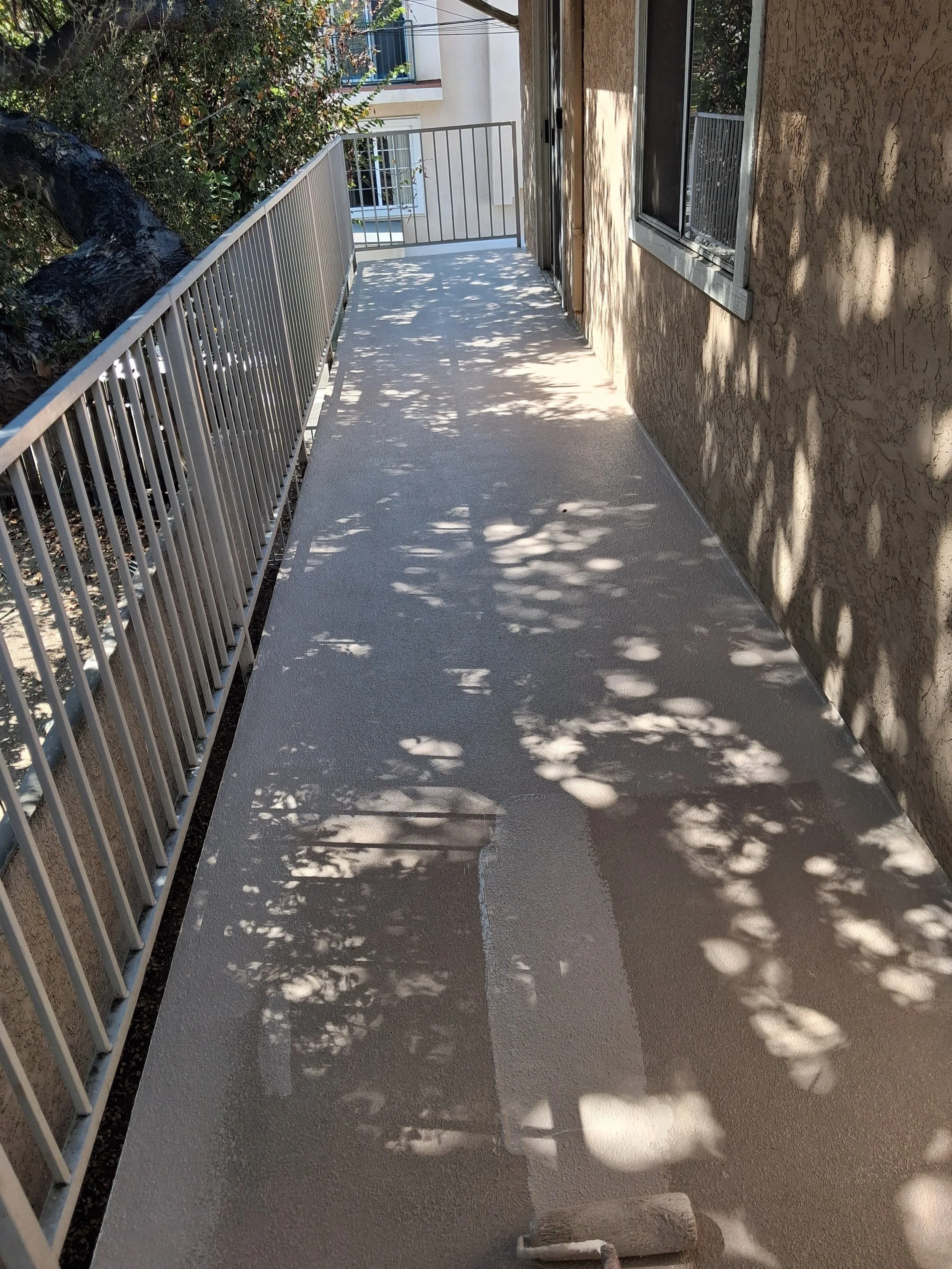
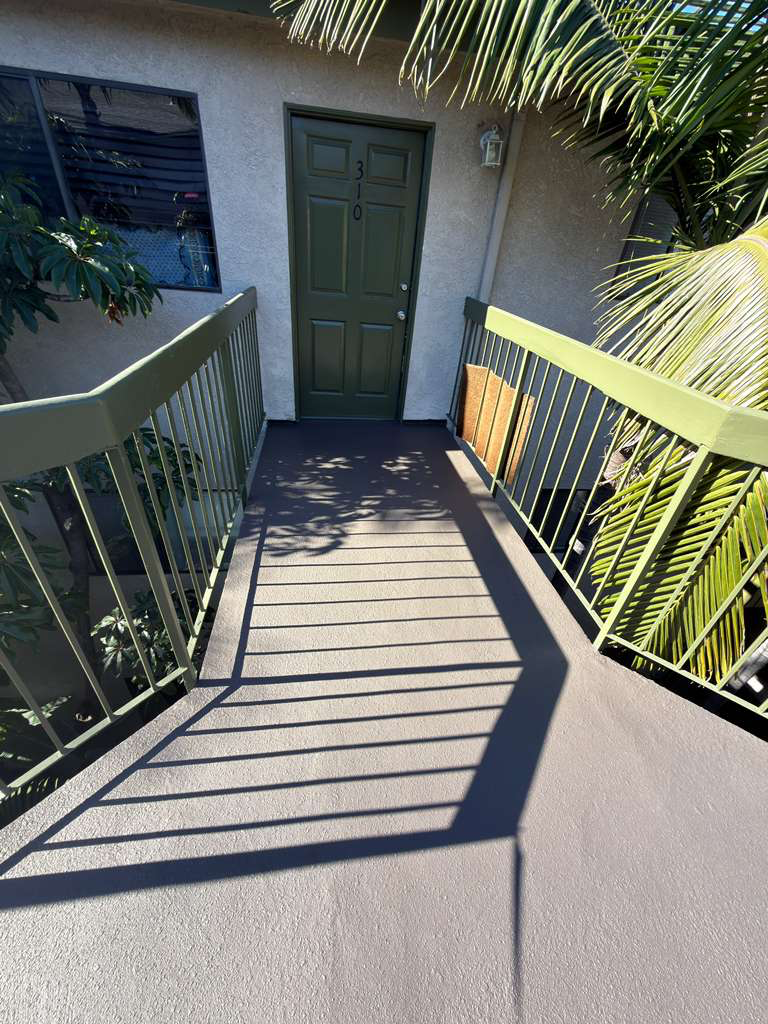
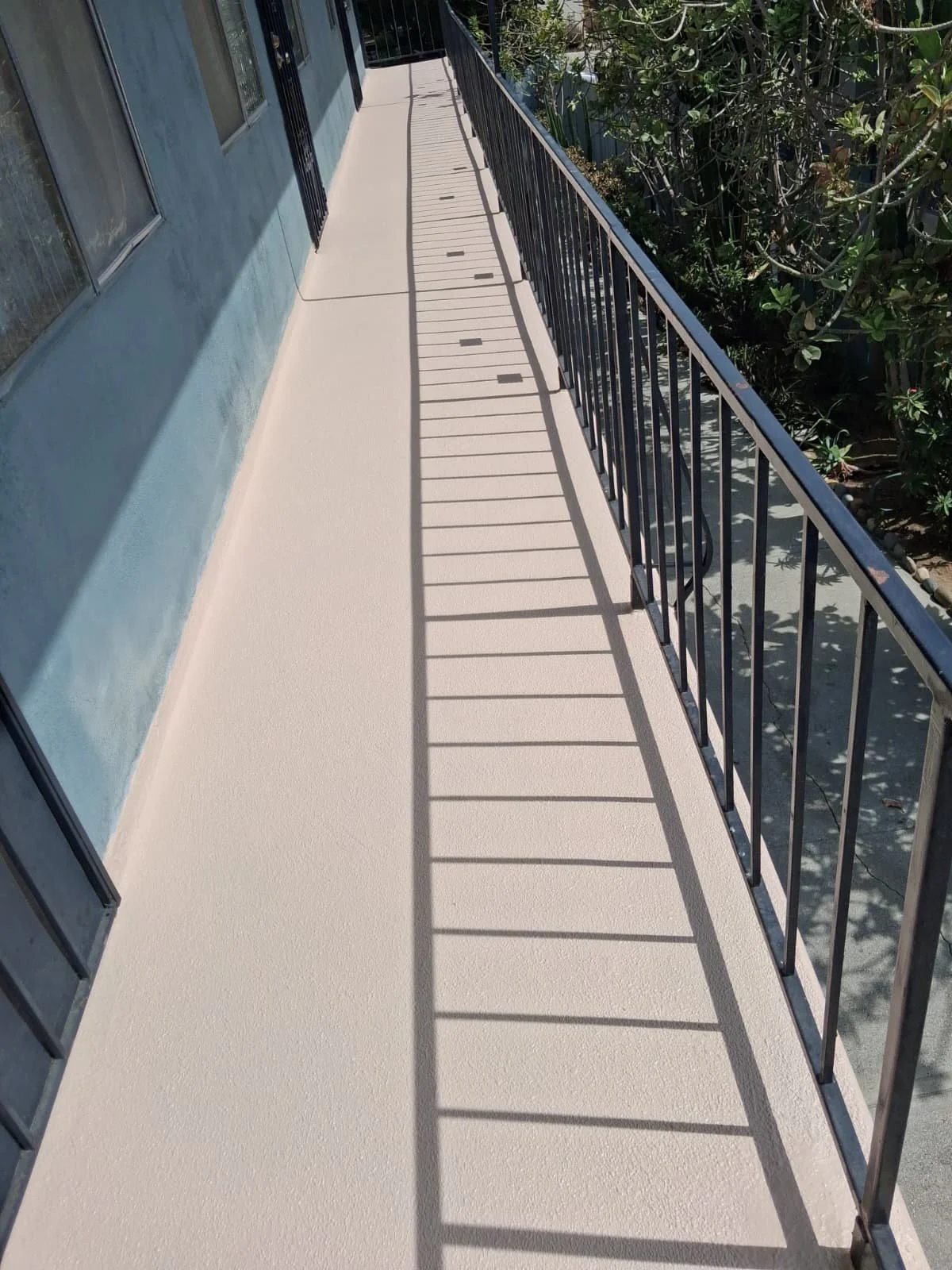
What Magnesite Is
Magnesite is a cement-like material that was mixed and troweled on in a thin layer over plywood, usually with a smooth finish and lines scored into it. Builders liked it because it was hard, fire-resistant, and cheap. What they did not plan for was four or five decades of valley heat. Many owners searching for help call it concrete — we get calls about “concrete stairs” and “concrete decks” that turn out to be magnesite, because most people have never heard the word.
Signs Your Magnesite Needs Repair
Long cracks following the scored lines in the surface
Chips and crumbling at stair edges and door thresholds
White crust or rust stains where railings meet the surface
Water stains on the ceiling under a magnesite deck or walkway
A hollow sound when you knock on the surface
Pieces of the surface lifting or flaking after rain
How We Repair Magnesite
We open the damaged areas and repair what the water hurt underneath — magnesite that sounds hollow has usually let water into the plywood below it. Sound magnesite stays, bad material comes out, and the fiberglass system goes over the whole surface so the deck or walkway is one waterproof layer again. It finishes with a top coat in the color you choose. You water-test it yourself before you pay anything — we ask for no money upfront.
Magnesite and the Inspection Laws — SB 721 and SB 326
Because most older condo and apartment walkways are magnesite, magnesite repair is a big part of inspection work in Westlake Village, where HOAs carry the exterior surfaces. Apartment buildings with 3 or more units are inspected under SB 721 every 6 years; condos are inspected under SB 326 every 9 years. When an inspector flags a magnesite balcony, deck, walkway, or stairway, that repair is exactly our trade, and we guarantee our work will pass the inspection. If it doesn’t pass, we don’t get paid.
Questions About Magnesite Deck Repair in Westlake Village
Can magnesite be repaired, or does it all have to come off?
It depends on the condition. Sound magnesite can stay under the new fiberglass system; loose, cracked, or hollow areas are opened and repaired first. We tell you which one your surface needs after we see it.
Is magnesite the same as concrete?
No — it looks similar, but magnesite is a thinner, lighter material poured over plywood, and it is repaired a different way than a concrete slab.
Do you repair magnesite stairs too?
Yes — most of the stairs we repair are magnesite, and the same fiberglass system is used on steps, landings, and walkways. Stair repairs are priced by the number of steps.
Call (323) 230-3174
See finished work on our Projects page, and see our other Westlake Village pages for balcony waterproofing, deck waterproofing, stairway repair, and waterproofing contractor. Send us a picture of your magnesite surface and its measurements, and we will price the repair from those.